
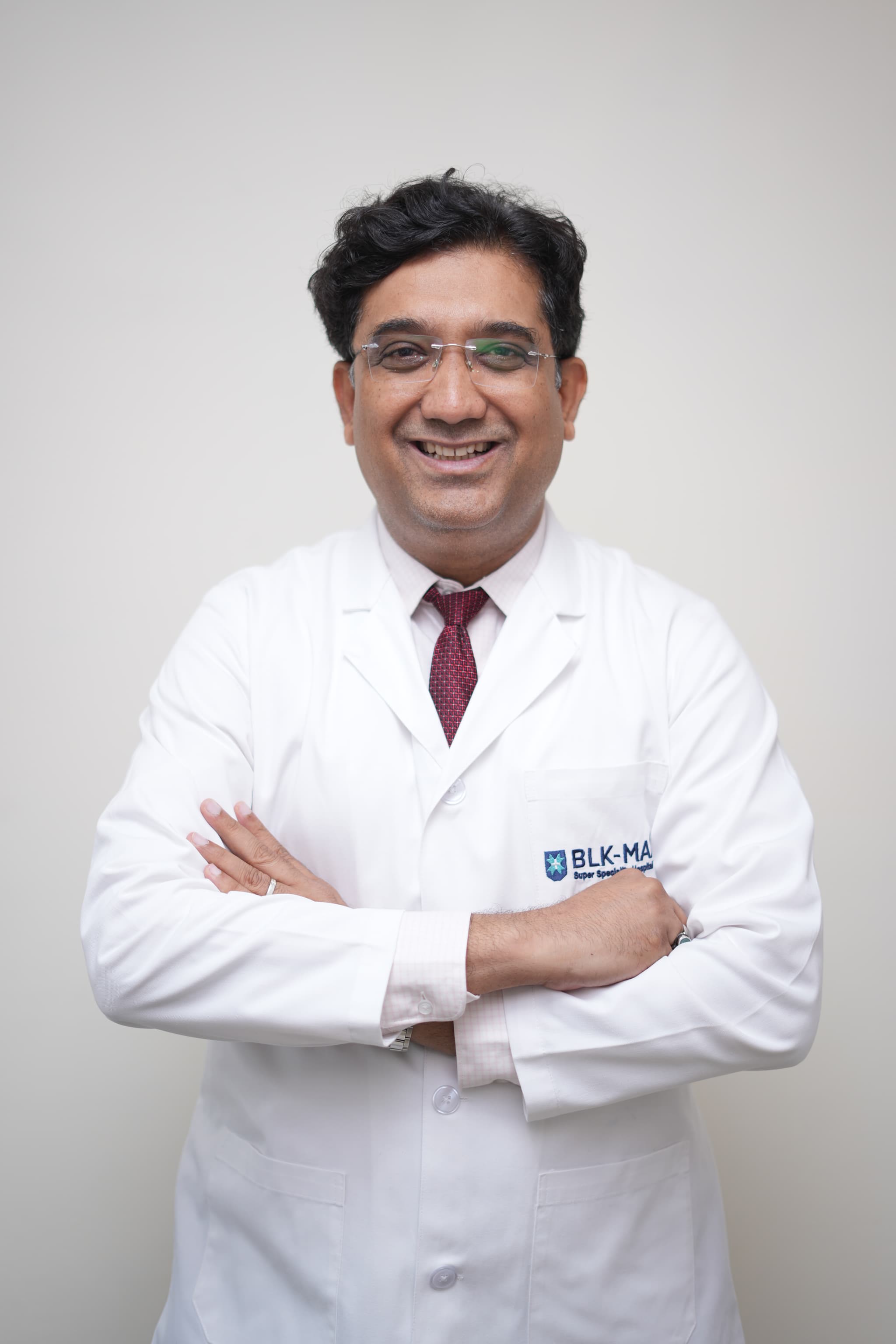
Dr. Sajjan Rajpurohit
Vice Chairman & Head Clinical Administration - Medical Oncology
Welcome to the practice of Dr. Sajjan Rajpurohit, Vice Chairman & Head of Clinical Administration – Medical Oncology, and one of Delhi’s most trusted cancer specialists. With 25+ years of experience, he provides advanced and personalized care across a wide spectrum of cancers, including breast, thoracic, gynecologic, head & neck, neuro, uro, gastrointestinal & hepatobiliary, musculoskeletal, and paediatric oncology. Whether you need expert guidance or cutting-edge therapies, Dr. Sajjan is here to support you at every step of your journey.
35,000+
Happy Patients
25+
Years Experience
80+
Research & Publications
15+
Awards
Professional Journey
Work Experience
- Currently working at Max Healthcare (Oct 2026 - Present)
- Director & Head – Medical Oncology, Medanta Super Speciality Hospital, Noida (Sep 2025 - Oct 2026)
- Senior Director & HOD – Medical Oncology, BLK-Max Super Speciality Hospital, New Delhi (Oct 2021 - Sep 2025)
- Principal Consultant & Head – Medical Oncology, Max Multi Speciality Centre, Noida (Nov 2019 - Sep 2021)
- Consultant – Rajiv Gandhi Cancer Institute and Research Centre, New Delhi (Feb 2011 - Oct 2019)
- Medical Director – Mansaram Hospital, New Delhi (Sep 2007 - Aug 2009)
Why Choose Dr. Sajjan Rajpurohit
Experience
Over 25+ years as a leading oncologist with thousands of successful treatments.
Certifications
European Certified Medical Oncologist (ESMO), currently working with Max Healthcare.
Patient-Centric Care
Every treatment plan is tailored to your unique diagnosis and needs.
Advanced Treatment Options
Expertise in cutting-edge therapies, including targeted therapy, immunotherapy, and precision medicine.
Compassion & Support
Dedicated to providing not just treatment but also guidance and emotional support throughout the journey.
Types of Cancer Treated by Dr. Sajjan Rajpurohit

Pancreatic Cancer

Gallbladder Cancer

Breast Cancer

Ovarian Cancer

Lung Cancer

Throat Cancer

Liver Cancer

Mouth Cancer

Cervical Cancer

Stomach Cancer
Comprehensive Cancer Care Services
Expert Treatments for Every Stage of Your Journey
Chemotherapy
Safe and effective drug-based treatment to target and eliminate cancer cells, customized to your condition.
Immunotherapy
Harness your body’s immune system with the latest advancements to fight cancer naturally and powerfully.
Targeted Therapy
Precision medicine that attacks cancer cells while sparing healthy tissue, offering fewer side effects.
Proton Therapy
Cutting-edge radiation technology for precise tumor targeting, minimizing damage to surrounding areas.
Radiotherapy
Advanced radiation techniques to shrink tumors and alleviate symptoms with expert care.
Robotic Surgery
Minimally invasive, high-precision surgery for faster recovery and better outcomes.
Bone Marrow Transplantation
Life-saving procedure for blood cancers, performed with the highest standards of expertise.
Teleconsultation Services
Convenient, expert advice from anywhere in the world via secure online consultations.
Gallery Images
Informative Videos
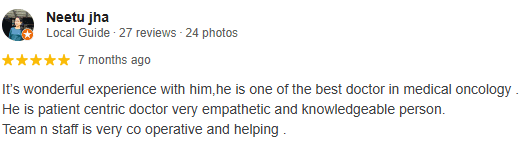
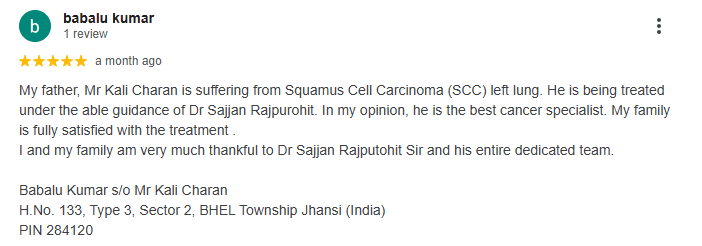
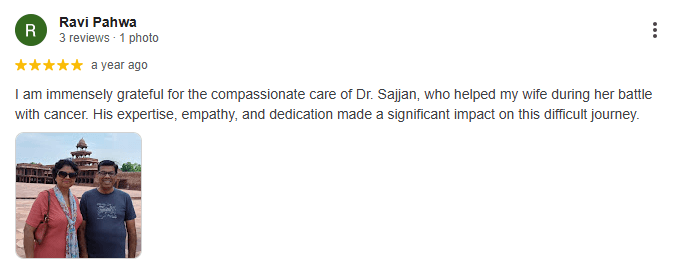
Patients Testimonials
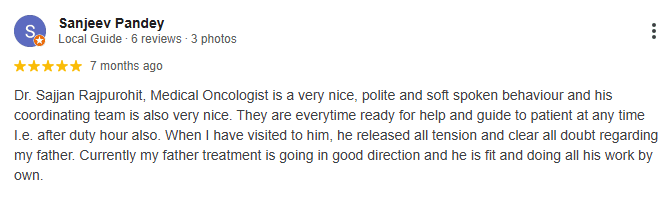
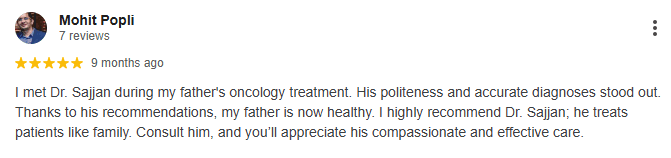
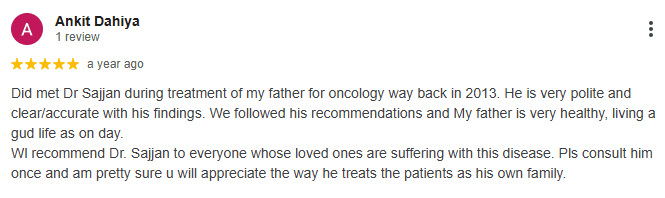
Your Healing Journey Starts Here – Let’s Move Forward Together
Dr. Sajjan Rajpurohit with you on your journey to happiness and healing
Frequently Asked Questions About Dr. Sajjan Rajpurohit
Although cancer is common, only 5-10% of it is hereditary, which means someone has inherited a higher risk for cancer from a parent. The risk of cancer can be inherited through a small change (called a mutation) in a gene that can be passed from one generation to the next. Cancer is a hereditary disease, meaning that inherited gene mutations account for about 5 to 10% of all cases. If there has been more than one generation of cancer, it might be considered hereditary. A family history means that one or more of your blood relatives has been diagnosed with breast or ovarian cancer. These relatives may be deceased or still living. It may be parents, siblings, or children of first-degree relatives. Most cancer patients do not have a family history of the disease. It is estimated that about 5% to 10% of cancer cases can be inherited. Myth: If my family has cancer, I will get it too. The fact is, there are times when members of the same family develop cancer due to shared behaviors.
It is impossible for cancer genes to skip generations. One in two (50%) chances are that you have inherited a gene mutation from your parents. In other words, whether you have it or not. It is impossible for you to pass the mutation on to your children if you do not inherit it. Therefore, some children will carry the faulty gene and be at increased risk of developing cancer, while others will not.
Various modalities commonly used in cancer treatment are:
- Hormone Therapy
- Radiotherapy
- Chemotherapy
- Targeted therapy
- Immunotherapy
- ROBOTIC SURGERY
- CAR-T CELL THERAPY
The choice of treatment depends on the type of cancer, presentation stage, age, patient's general condition, pathology, and molecular reports. All these factors are taken into consideration before making a treatment decision. Many cancers require multi-modality treatments e.g. surgery followed by chemo or radiotherapy, concurrent chemo-radiotherapy, chemo-immunotherapy, etc. Consultations with a surgical oncologist, radiation oncologist, and medical oncologist are required in such scenarios.